
The lights go out, the television stops and, somewhere in the house, someone asks whether the Wi-Fi is working. Your first thought is probably to check when the electricity will be back.
Before you get caught up refreshing an outage map, take a few minutes to check the people around you and make the house safe. An oven may have been running, someone could be halfway down the stairs, or a piece of medical equipment might have switched to battery power.
The following steps give you a sensible order to work through during the first hour. If someone needs urgent help, deal with that immediately rather than following the timings.
First few minutes: get your bearings
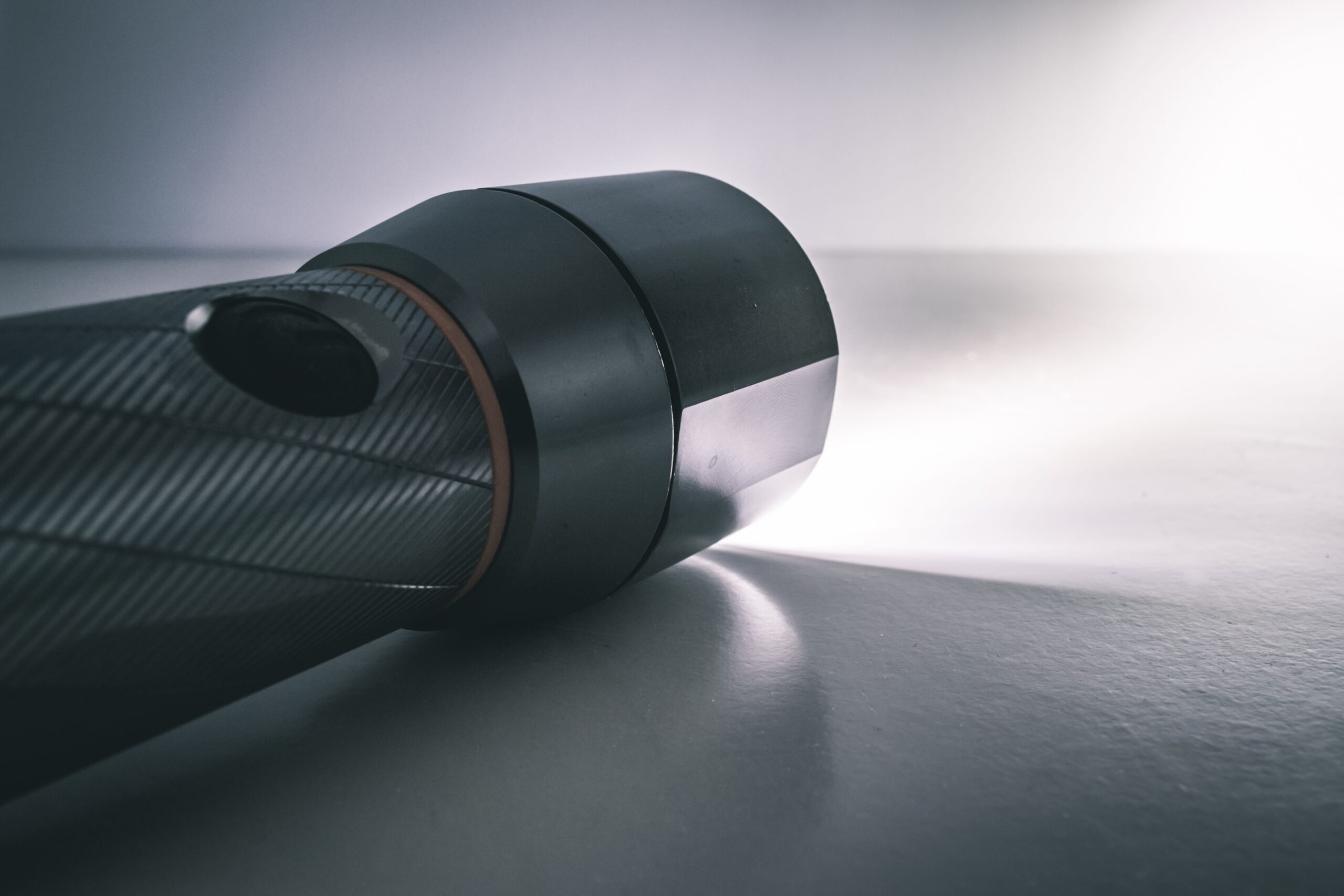
If it is dark, find a torch or battery lantern before moving around. Your phone’s torch is useful while you locate one, but a separate light leaves your phone battery available for calls and updates. Torches are also safer than candles. UK power cut guidance
Check where everyone is, particularly children and anyone who has difficulty moving around. Bring a light to them if necessary. Keep stairs and doorways clear, and settle pets somewhere they are unlikely to get underfoot.
If someone relies on powered medical equipment, check it straight away. Follow the backup arrangements agreed with their care team or equipment provider, including who to contact and how long any backup supply should last. Do not wait for a restoration estimate if their health is at risk. Call 999 or 112 for a life-threatening emergency. Government guidance on medical equipment during power cuts
Smoke, sparks or signs of fire require a different response: leave the property and call 999 from a safe place. Stay away from fallen power lines and damaged electrical equipment.
Within 10 minutes: check whether it is just your home
Look outside or contact a neighbour. If nearby homes have lost power too, that suggests a network outage. If they still have electricity, the problem may be within your property.
You can look at the switches on your fuse box or consumer unit if it is safe to reach. Do not touch electrical equipment if the area is wet or there are signs of damage.
If a switch has tripped, follow the instructions for your unit. Where appropriate, switch off or unplug appliances before resetting it. If it trips again, leave it off and get help from a qualified electrician. Avoid repeatedly resetting a switch without understanding why it is tripping. National Grid advice on checking your supply
If you rent, contact your landlord or managing agent about a suspected fault within the property.
Within 15 minutes: report the outage and get an update
For a network power cut, contact the company responsible for the local electricity cables. This may be different from the supplier that sends your bills.
- England, Scotland and Wales: call 105.
- Northern Ireland: call NIE Networks on 03457 643643.
You can also check your network operator’s outage service online if mobile data is working. Have your postcode ready and explain any urgent support needs. UK reporting guidance, NIE Networks outage service
Do not assume somebody else has reported it. Note the time the power went off and any estimate you receive. Restoration times can change as engineers find out more about the fault, so use the estimate to help you plan rather than treating it as a promise.
Next: make appliances safe
Work through anything that was in use when the electricity stopped. Switch off cooking appliances, irons and portable electric heaters so they cannot restart unattended.
Unplug sensitive equipment such as televisions and computers where it is safe to do so. Leave one light switched on to let you know when power returns. There is no need to dismantle equipment or start disconnecting things you cannot safely reach. National Grid power cut advice
Keep any essential medical equipment connected or on its backup supply according to the agreed care plan.
Keep the fridge and freezer closed
Opening the fridge to inspect its contents releases some of the cold air you are trying to preserve. During the first hour, the most useful action is usually to leave the doors shut.
The Food Standards Agency advises that a fridge should remain cold for around four hours. A full freezer may keep food frozen for up to 48 hours, or around 24 hours if half full. These are estimates: the appliance, room temperature and how often you open it all make a difference. Food Standards Agency guidance
The time you noted earlier will help if the outage continues. For now, avoid moving everything around or throwing food away simply because the power has stopped.
Refrigerated medicines need separate consideration. Check their storage instructions and contact a pharmacist or care provider if necessary; food-storage timings should not be applied to medication.
Use the rest of the hour to get comfortable and stay connected
Put your phone into battery-saving mode, reduce screen brightness and connect a charged power bank if you have one. Send a brief update to anyone who needs to know you are safe, then check official information periodically.
Your home broadband may be unavailable, and mobile service can also be disrupted. A battery or wind-up radio provides another way to hear updates. Avoid relying entirely on a phone that is already running low.
If the house is getting cold, put on extra layers and bring out blankets. Choose a comfortable room, close doors to unused rooms and draw the curtains when appropriate. In hot weather, focus instead on keeping people cool and checking anyone who is particularly vulnerable to heat.
Check on a neighbour if you can do so safely, especially someone who lives alone or may need assistance. A working torch, a spare blanket or help making a call may be enough to resolve their immediate difficulty.
Avoid improvised heating or cooking arrangements. Never bring a barbecue indoors or use outdoor cooking equipment inside. Fuel-powered generators must be operated outdoors, away from doors, windows and vents. These can produce carbon monoxide, which you cannot see or smell. London Fire Brigade carbon monoxide advice
People who need additional help may be eligible for their electricity network’s Priority Services Register. It can provide extra communication and support during outages, but it does not guarantee an uninterrupted supply or replace a medical backup plan. About priority support
Before the first hour is over
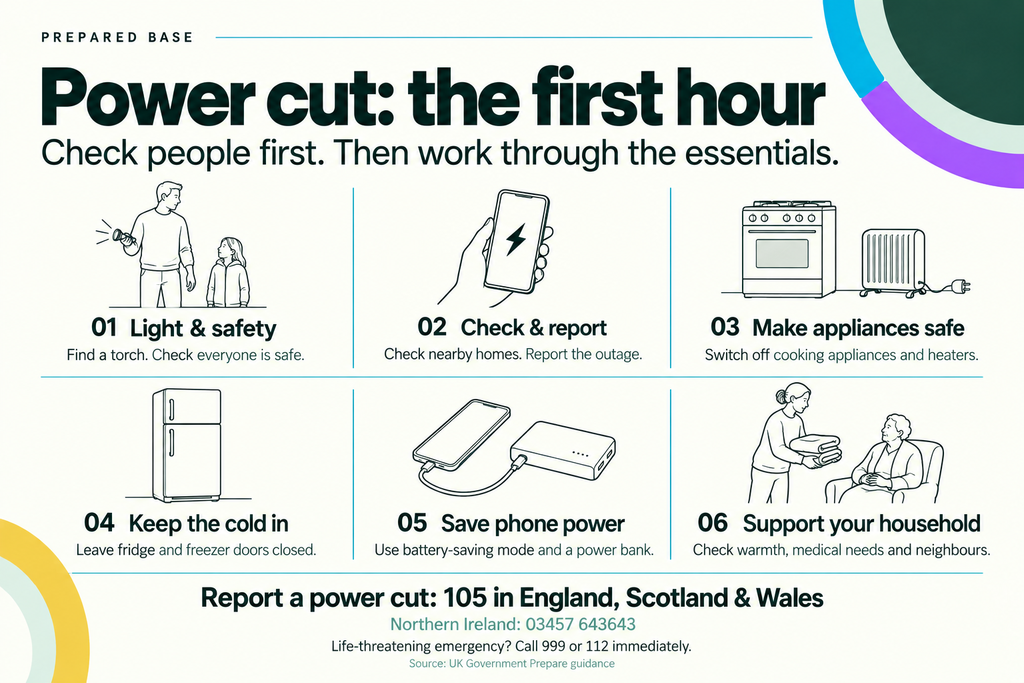
By this point, aim to have checked that everyone is safe, reported the outage, switched off anything that could restart dangerously and protected your remaining phone battery. The fridge and freezer should still be closed, and anyone with additional needs should have the support they require.
If the power returns, check the house before restarting appliances. If it stays off, consider the next few hours: available lighting, food, water, temperature and the limits of any essential backup equipment.
There is no need to wait for the house to become uncomfortably cold, or for a medical battery to run nearly flat, before arranging somewhere suitable to stay. Making that decision while you still have light, a working phone and time to organise help is much easier.