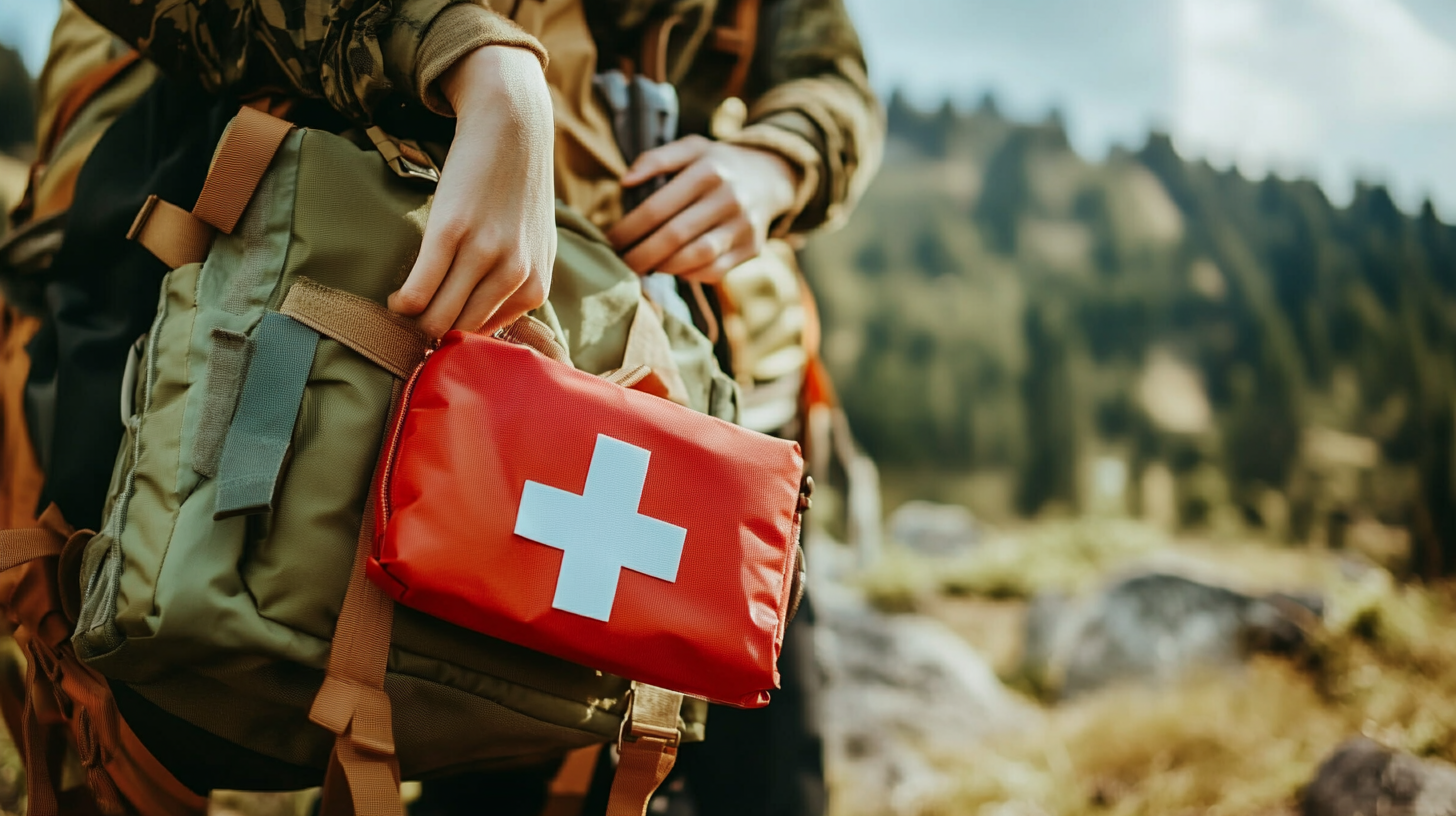
A first aid kit is reassuring to have in the cupboard. Open it, though, and a few questions may follow. Which dressing would you use for a wound that is bleeding heavily? What would you do if someone collapsed? When should you call an ambulance?
The supplies matter. So does knowing what to do with them.
You do not need to become a medical expert to help someone. Learning a few practical skills can give you a starting point when an injury or sudden illness catches you off guard. That is useful on an ordinary day and during disruption, when poor lighting, missing water or a flat phone may make things harder.
Start by checking whether it is safe to help
Before approaching someone, look for anything that could harm you as well: traffic, electricity, fire, smoke, broken glass or chemicals.
A person lying beside a damaged electrical appliance needs help, but touching them while they are still in contact with live electricity could injure you too. Your first action may be to keep others back and call the emergency services.
A first aid course teaches a structured assessment so you can identify urgent problems without becoming distracted by a visible but less serious injury. Learn that sequence and practise it with an instructor. St John Ambulance includes assessment, resuscitation, choking and severe bleeding among its basic life-support skills. St John Ambulance guidance
Learn how to make a useful emergency call
In a UK medical emergency, call 999 or 112. Give the location clearly, explain what has happened and answer the call handler’s questions. They can guide you through what to do while help is being arranged. NHS emergency-call guidance
Keep your home address and postcode where everyone can find them. Include useful access details, such as a difficult entrance or a building number that is hard to see.
Teach children how to call for help and say where they are. Rehearse the conversation without actually dialling an emergency number.
If other people are present, give someone a specific job: “Please call an ambulance” is clearer than hoping somebody has already done it. Another person may be able to meet the crew, if doing so is safe.
Put CPR and defibrillator use near the top of your learning list
If someone becomes unresponsive, call for emergency help immediately. Check their breathing while the call connects. If they are unresponsive and not breathing normally, start CPR and follow the call handler’s instructions. Gasping is not normal breathing.
Use an automated external defibrillator—an AED—as soon as one is available, following its spoken and visual instructions. Anyone can use one; you do not have to wait for a trained person to arrive. Resuscitation Council UK guidance
Practical training lets you try chest compressions on a manikin and become familiar with an AED trainer. It also gives you the chance to ask questions about something that may feel daunting when you first read about it.
Choose training that covers babies and children if they are part of your household. Their resuscitation techniques differ from an adult’s.
Understand when the recovery position is appropriate
Someone who is unresponsive but breathing normally still needs urgent help and continued monitoring.
Learn how and when to use the recovery position to help keep their airway clear. It is not appropriate for someone who needs CPR. Suspected trauma also changes how you should handle the person, so follow emergency-call advice rather than automatically moving everyone onto their side.
Keep checking their breathing. If it becomes abnormal, be ready to begin CPR. Resuscitation Council UK first-aid guidance
Learn choking first aid for the people you care for
A person who can cough effectively needs a different response from someone who cannot speak, cough or breathe properly.
Learn how to recognise that difference and what action follows. Adult, child and baby choking techniques are not interchangeable. Never give abdominal thrusts to a baby under one year old, and do not blindly put fingers into someone’s mouth to search for an obstruction. Use an age-appropriate first-aid guide and practical training. St John Ambulance choking resources
Parents, grandparents, carers and regular babysitters should all have an opportunity to learn. The person who usually knows what to do may be the one who is away—or the one needing help.
Practise controlling serious bleeding
Heavy bleeding needs prompt action and an emergency call.
Apply firm, direct pressure using a sterile dressing or a clean, non-fluffy cloth. Wear first-aid gloves if available. If an object is embedded in the wound, leave it in place and apply pressure around it rather than on it. Follow the call handler’s instructions. St John Ambulance severe-bleeding guidance
In training, practise opening a dressing and maintaining pressure. Familiarity helps: a tightly wrapped packet can be surprisingly awkward when your hands are shaking.
Specialist bleeding-control equipment needs appropriate instruction. If you keep a tourniquet or haemostatic dressing, include training in your preparations.
Know the first action for a burn
For a heat burn or scald, begin cooling the affected area under cool running water for 20 minutes. Remove nearby jewellery and clothing unless stuck to the skin.
After cooling, cling film can be laid over the burn; do not wrap it around a limb or put it over the face. Avoid ice, butter and creams. Keep the rest of the person warm, particularly a child.
Large or deep burns, electrical and chemical burns, and burns affecting sensitive areas need urgent assessment. Check the appropriate medical advice rather than judging seriousness by pain alone. NHS burns guidance
Discuss with your household how you would access clean water if the supply were interrupted.
Recognise sudden illness as well as injuries
First aid also means recognising when someone needs medical help quickly.
Learn FAST for possible stroke: facial weakness, arm weakness, speech problems and time to call 999. Act even if symptoms improve or disappear. NHS stroke guidance
If someone has a seizure, keep nearby hazards away, cushion their head if possible and time it. Do not restrain them or put anything in their mouth. Call 999 for a first seizure, one lasting more than five minutes, repeated seizures without recovery, or problems breathing afterwards. Follow an existing care plan where relevant. NHS seizure guidance
Include household-specific conditions in your learning. Someone with severe allergies, asthma, diabetes or epilepsy may already have an emergency care plan. Ask them and their healthcare team what family members or carers should know, including how to assist with prescribed emergency treatment.
Give the skills somewhere to live
Book practical training with a recognised provider and keep a reliable first-aid reference with your kit. St John Ambulance offers free resources alongside courses; some community sessions cover adult or family essentials. St John Ambulance training and resources
After training, make the arrangements work at home. Show others where the kit is. Keep medicines and allergy information accessible. Check whether more than one person could respond, and agree check-ins if you live alone.
Refresh your learning periodically. Practise CPR on a training manikin, not on another person, and never rehearse forceful choking treatments on friends or family.
Start with an emergency-call rehearsal and a course covering CPR, AED use, choking and serious bleeding. Once you have tried those skills with guidance, opening the first aid kit should feel a little less like facing a collection of unfamiliar packets.