A first aid kit usually gets opened when someone is already hurt. That is an awkward time to discover that the plasters have lost their stick, the scissors have disappeared or the only dressing is too small.
Putting a useful kit together takes a little thought, but it does not need to be expensive or complicated. Start with supplies for the injuries you are most likely to encounter at home, then adjust them for the people who live there.
The aim is to manage minor injuries and provide immediate help while professional care is being arranged. Knowing when to call for help matters just as much as knowing where the bandages are.
Start with the essentials
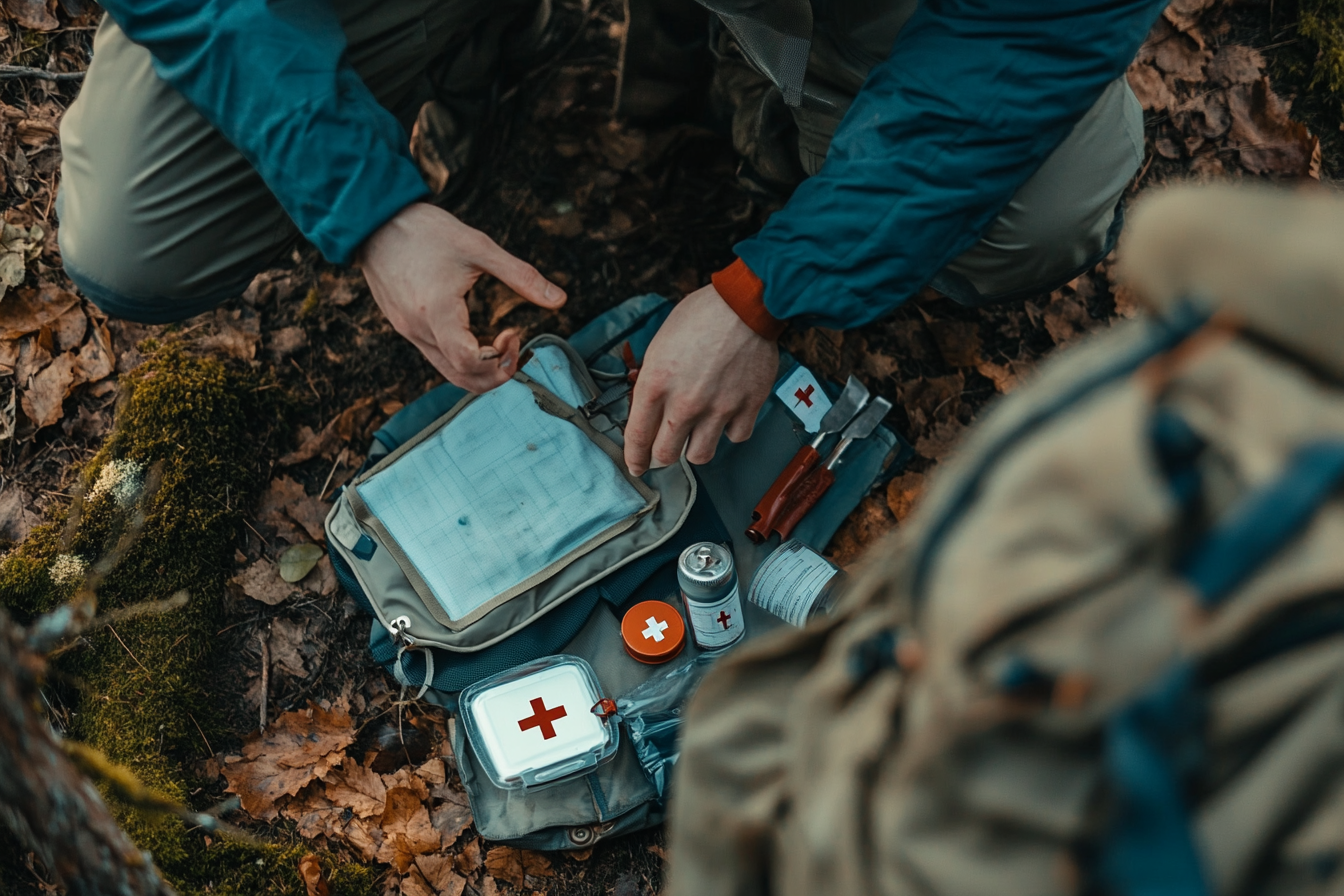
Whether you buy a ready-made kit or assemble your own, check the contents rather than relying on the number of pieces advertised. A hundred small plasters may inflate the total without giving you much variety.
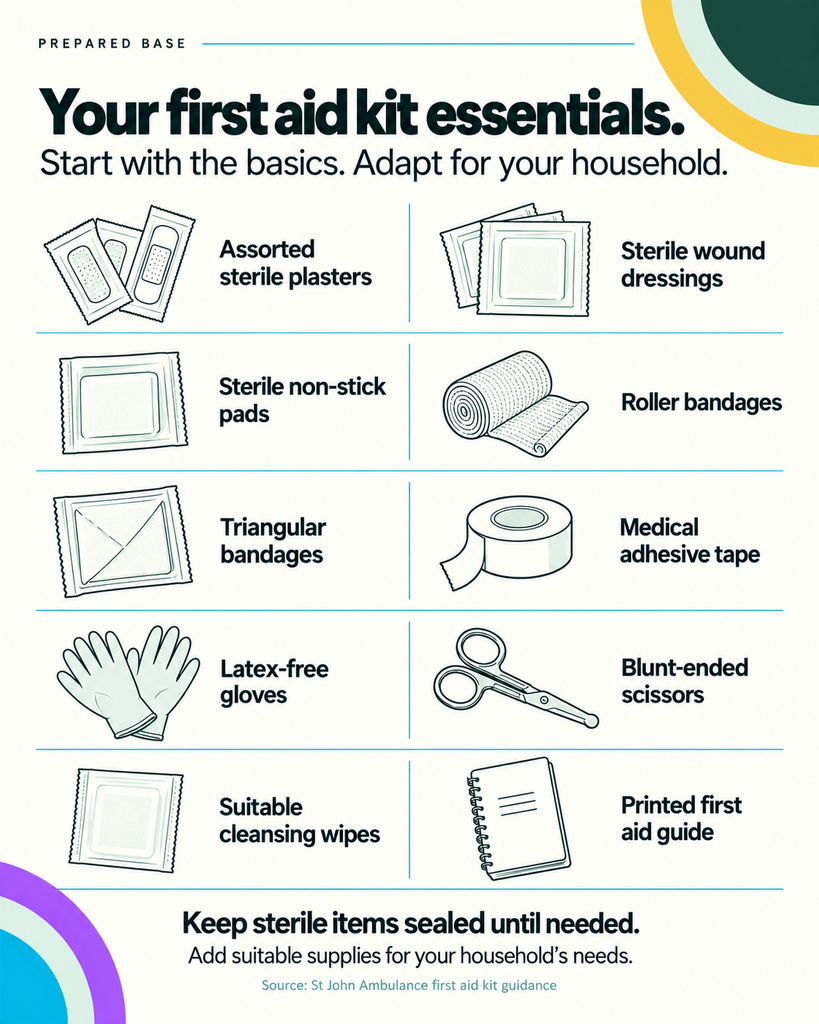
These supplies form a practical starting point:
| Item | What to look for |
|---|---|
| Assorted sterile plasters | Several sizes, including larger ones. Choose suitable alternatives for anyone with adhesive sensitivities. |
| Sterile wound dressings | Individually wrapped dressings in medium and large sizes, including some with attached bandages. |
| Sterile non-stick pads | For covering wounds without sticking directly to them. |
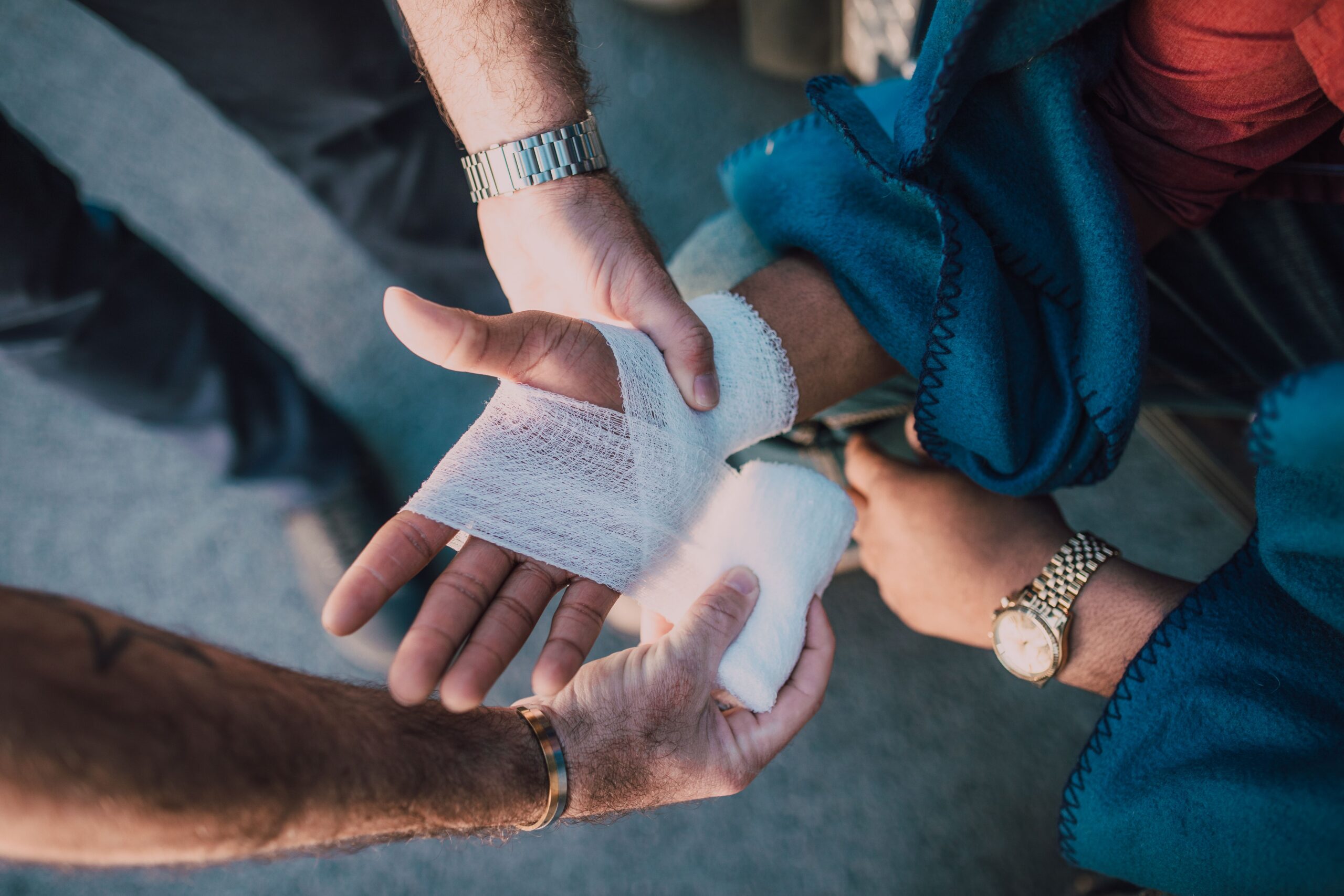
| Roller bandages | To hold dressings in place. |
| Triangular bandages | For supporting an injured arm as a sling, following first aid guidance. |
| Medical adhesive tape | To secure dressings and bandages. |
| Disposable, latex-free gloves | Several pairs, in sizes the adults in your household can use. |
| Blunt-ended scissors | For cutting tape, bandages or clothing when necessary. |
| Suitable cleansing wipes | Check their intended use; some are for surrounding skin rather than open wounds. |
| A current first aid guide | A printed reference that remains available when a phone is flat or offline. |
These basics reflect the supplies recommended by St John Ambulance.
Keep sterile items in their individual packaging until needed. Opening everything to make the kit look neatly arranged removes the protection the packaging provides.
Add a few useful supporting items
A digital thermometer is useful for checking a temperature. Choose one appropriate for the ages in your household and keep its instructions with it.
Tweezers can help with small, superficial splinters. They are not for digging into a wound or removing an embedded object. A small torch or headlamp also makes it easier to see what you are doing during a power cut.
You may want to include sterile saline labelled for wound or eye irrigation, plus a foil emergency blanket. Follow the product instructions; a small saline bottle will not provide enough irrigation for a serious chemical exposure.
The NHS includes a thermometer, tweezers and eyewash among useful household first aid supplies. NHS household preparedness advice
Clean water still has a job to do
It is easy to assume that every cut needs an antiseptic product. For a small wound, once bleeding is controlled, NHS guidance advises rinsing it with tap or bottled water, cleaning the surrounding skin and applying a sterile dressing. Avoid getting antiseptic into the wound. NHS advice on cuts and grazes
This is another reason to include safe water in your wider emergency supplies. A few wipes in a pouch cannot cover every cleaning need if the mains supply is unavailable.
Burns are another example where the right action matters more than the contents of the kit. Cool a heat burn under cool running water for 20 minutes. After cooling, clean cling film can be laid loosely over it, rather than wrapped around a limb. Do not use it on the face, and do not apply ice, butter or creams. A burn gel should not replace proper cooling. NHS burns guidance, specialist NHS burns advice
Plan medicines around your household
Keep medicines organised separately from dressings and equipment, with storage suited to each product.
A pharmacist can help you choose appropriate over-the-counter medicines for the people in your home, taking account of age, allergies, health conditions and other medication. Keep them in their original packaging with the instructions, and follow the label or prescribing advice.
For children, use the correct formulation and the supplied measuring device. An oral syringe measures liquid medicine more accurately than a kitchen teaspoon. NHS advice on children’s medicines
Store medicines out of children’s sight and reach, following any temperature requirements. Prescribed emergency medicines, such as an adrenaline auto-injector or reliever inhaler, need to remain accessible to the person who may need them. Household members should know their location and the relevant care plan. NHS advice on storing medicines
Make the kit fit the people who use it
A person living alone needs the same range of basic supplies as a family, although fewer replacements may be needed. Larger households should hold more of the items used once: gloves, plasters and sterile dressings.
Consider the injuries and difficulties your household actually encounters. Gardening, cooking and practical work may mean you use larger dressings regularly. Children may need smaller plasters. Someone with limited hand movement may struggle with a stiff zip or tightly packed compartments.
If a household member takes blood-thinning medicine, has fragile skin or has a condition affecting wound healing, ask their clinician about any additional supplies and when an injury needs assessment.
For pets, keep a separately labelled pouch and your vet’s emergency contact details. Ask your vet what belongs in it rather than assuming the human kit covers their needs. PDSA pet first aid advice
Choose a kit you can find and maintain
A clearly labelled box or pouch with simple compartments is enough. Keep it dry, away from excessive heat, and somewhere household members can find it quickly. Protect children from access to scissors and other hazardous contents.
Put a paper contact card inside with your address, emergency contacts and relevant medical information. If somebody else has to make the call, having your postcode written down can help.
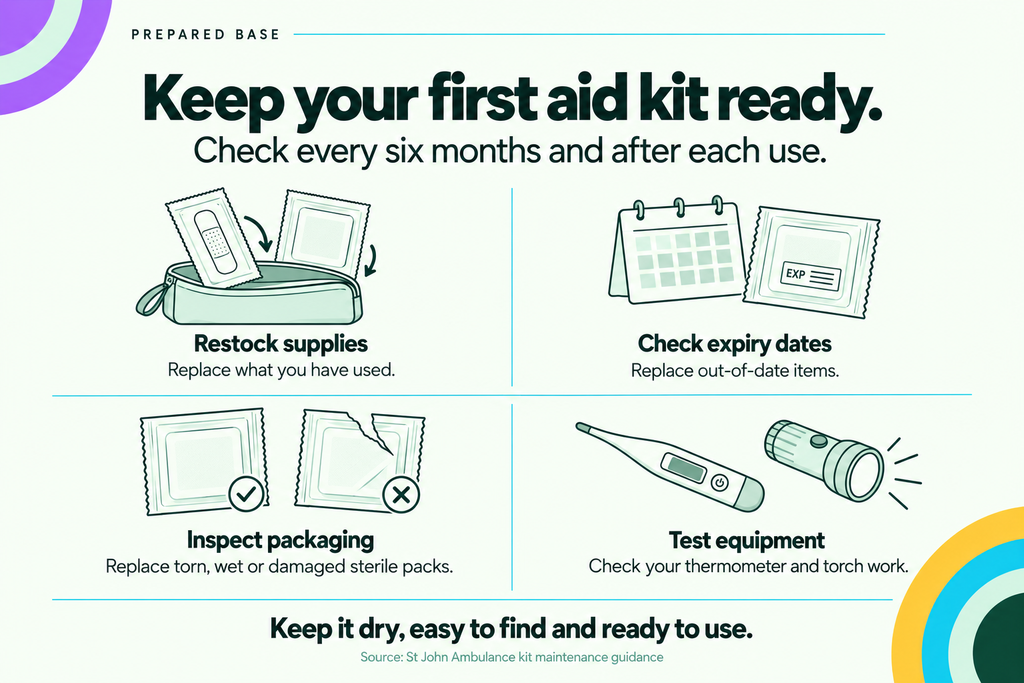
Check the kit every six months and after each use. Replace missing supplies, inspect expiry dates and remove sterile items whose packaging is torn, wet or damaged. Test the thermometer and torch as well. St John Ambulance kit maintenance guidance
Learn the skills alongside the supplies
Take a practical first aid course covering CPR, choking, severe bleeding and common household injuries. If you care for children, include infant and child first aid.
Specialist equipment, such as a tourniquet, deserves appropriate training and careful selection. Build your basic kit first, then consider additional equipment in light of your activities and what you know how to use. St John Ambulance first aid learning
Call 999 or 112 immediately for a life-threatening emergency, including severe bleeding, serious breathing difficulty, or someone who is unresponsive and not breathing normally. Put the phone on speaker and follow the call handler’s instructions. Do not delay urgent help while searching for equipment. NHS emergency guidance
Start by opening the kit you already own. Check its contents against the essentials, replace what is missing and make sure everyone knows where it lives. Then book the training that will help you use it.