Finding room for emergency water is often harder than buying it. A few bottles fit behind the groceries. A three-day supply for several people takes a little more thought.
Where you put that water matters, as does the container you choose and what happens after you open it. The aim is to have drinking water you can reach, handle and use with confidence when the taps stop working.
You can build a reliable reserve with ordinary bottled water or suitable containers filled at home. Choose an arrangement you can look after easily.
Work out the quantity before choosing the containers
For a basic three-day drinking-water reserve, 9 litres per person is a useful starting point. That means 18 litres for two people or 36 litres for four.
This covers drinking water only. Allow extra for cooking, hygiene, pets and particular care needs. UK Prepare guidance gives a minimum drinking-water allowance of 2.5–3 litres per person per day, and says 10 litres per person per day allows for basic cooking and hygiene as well. These are emergency planning quantities, rather than instructions about how much everyone should drink. UK Prepare guidance
Once you know your target, think about how you will use it.
A 20-litre container holds roughly 20 kilograms of water before you count the container itself. Someone has to lift it, position it and pour from it. Smaller containers may be much more manageable, especially if you live alone or have limited strength.
Try handling a filled container before making it the basis of your whole supply.
Buying bottled water is a straightforward option
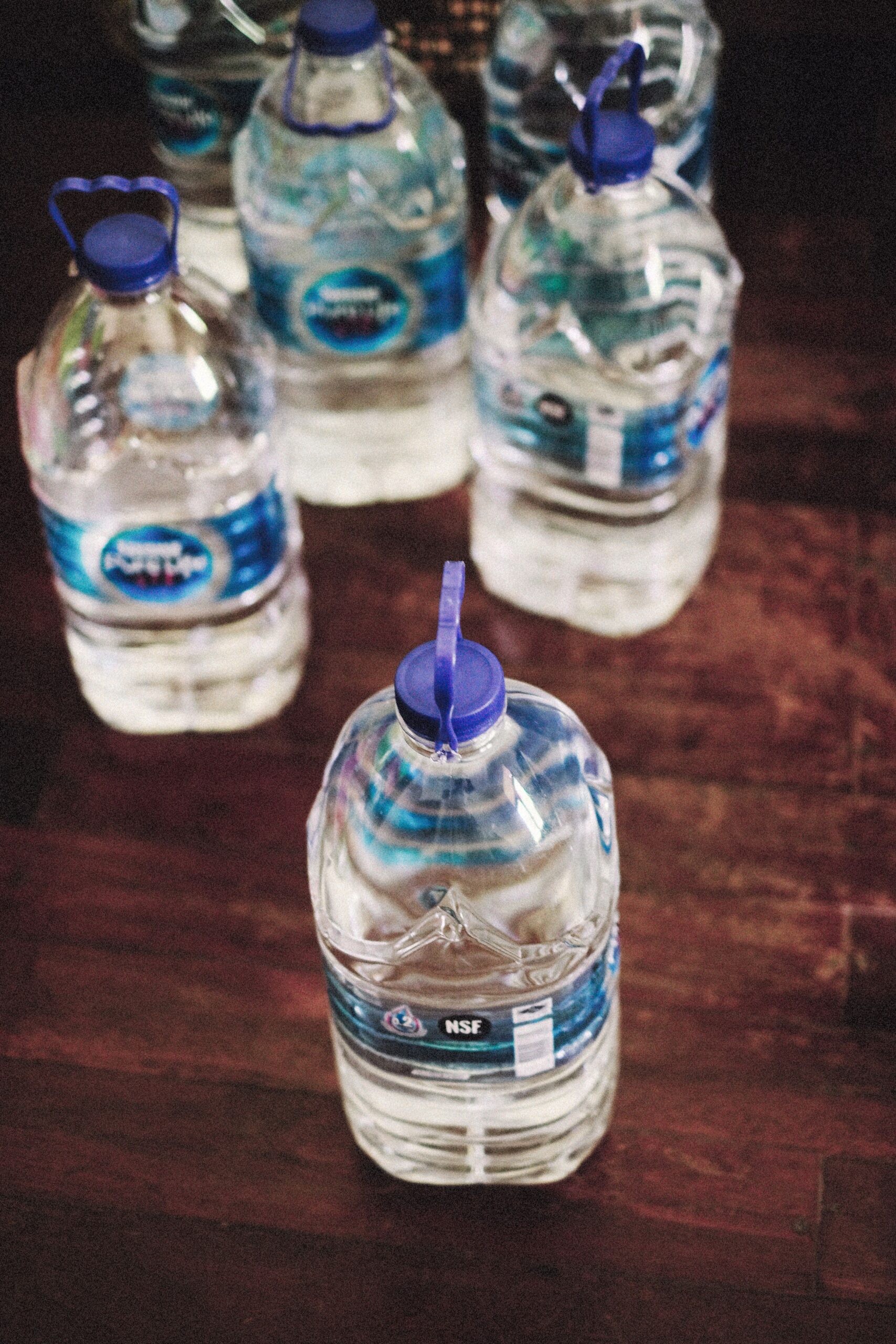
Keep shop-bought water in its original sealed bottles until needed. Check that caps and seals are intact, and follow the storage instructions on the label.
There is little benefit in opening several bottles and transferring them into one larger container. It creates another handling step and gives you more equipment to clean.
When putting bottles away, turn their dates towards the front. Use older stock first and replace what you take. Water UK’s storage guidance emphasises suitable conditions, intact packaging and stock rotation. Water UK guidance
You can mix sizes. Smaller bottles are useful for individual use or taking with you; larger bottles can serve a household at mealtimes.
Filling containers at home takes more preparation
Choose containers specifically intended for drinking-water storage, with secure lids and materials suitable for food contact. Ask the manufacturer if their suitability is unclear.
Never use a container that previously held fuel, pesticides, bleach or other toxic chemicals.
Before filling, wash and rinse the container, then sanitise it using a method suitable for that container. Include its cap and any dispensing parts. Follow the manufacturer’s instructions or a published public-health sanitising procedure, including the correct product strength, dilution, contact time and rinsing requirements. Do not guess a bleach dose.
The CDC provides a container-cleaning and sanitising method, followed by filling with safe water and closing tightly. CDC water-storage guidance
Use cold water from a tap you know supplies drinking water. In some older homes, bathroom taps are fed from a storage tank, while the kitchen cold tap is connected directly to the mains. If you are unsure about your plumbing, ask your water supplier or a qualified plumber. Drinking Water Inspectorate guidance
Fill your reserve while the supply is safe. If a water-quality notice is already in force, follow that notice before collecting water for drinking.
Choose somewhere cool, dark and accessible
An indoor cupboard away from heat is often a sensible place to start.
Avoid direct sunlight and places where temperatures rise sharply. A sunny conservatory or a hot loft is a poor choice. An unheated shed may expose containers to freezing, which can damage them.
Keep drinking water away from petrol, pesticides, solvents and similar substances. Vapours from some chemicals can penetrate plastic containers. Norway’s civil protection agency specifically advises cool, dark storage away from these products and warns about frost damage. DSB storage guidance
Then consider access. Could you reach the bottles safely in the dark? Would you need to move heavy boxes first? Is the shelf strong enough?
Several smaller storage spaces may work better than one large stack. Keep a note of what is stored where, and leave stairs, doorways and escape routes clear.
Label home-filled water and set a reminder
Mark each container “Drinking water” and add the date it was filled.
For home-filled supplies, the CDC recommends replacing the water every six months. Use that as a simple maintenance routine: empty, clean, sanitise, refill and update the label. It is a review interval, not a guarantee that poorly stored water remains safe for six months.
For commercially bottled water, follow the manufacturer’s date and storage instructions. CDC water-storage guidance
At each check, look for leaks, damaged caps and deterioration. Count the supply as well. Bottles borrowed for a journey or a picnic have a habit of disappearing from the household total.
If you empty older water as part of routine replacement, consider using it for a suitable household task rather than pouring it straight away.
Keep it clean when you start using it
Wash your hands before handling drinking-water containers. Pour water into a clean cup or use a clean dispensing tap. Avoid touching the inside of lids or putting hands into stored water. Close containers again after use. CDC safe-handling guidance
Opened bottles need different care from sealed stock. Follow the label’s refrigeration and consumption instructions. Water suppliers also advise refrigerating bottled water once opened. SES Water guidance
If the fridge is unavailable, smaller bottles help you open only what you need. Do not assume that an opened bottle has the same keeping qualities as an unopened one.
Keep any water reserved for non-drinking purposes clearly labelled and separate.
Know when to use another supply
Do not drink water you suspect has been contaminated. An unusual smell, colour or damaged container deserves attention, but clear-looking water is not proof of safety.
Boiling can kill many disease-causing organisms. It cannot make water contaminated with fuel or toxic chemicals safe to drink. A household filter is not a universal solution either; different products remove different contaminants. CDC emergency water-treatment guidance
If your supplier issues a boil-water, do-not-drink or do-not-use notice, follow its specific instructions. Those notices require different actions. Use an alternative safe supply when instructed. Drinking Water Inspectorate advice
Start by finding one suitable storage space and checking the containers you intend to use. Add the first bottles, record the quantity and set a reminder to review them. That gives you a water reserve you can keep track of—and rely on when you need it.