

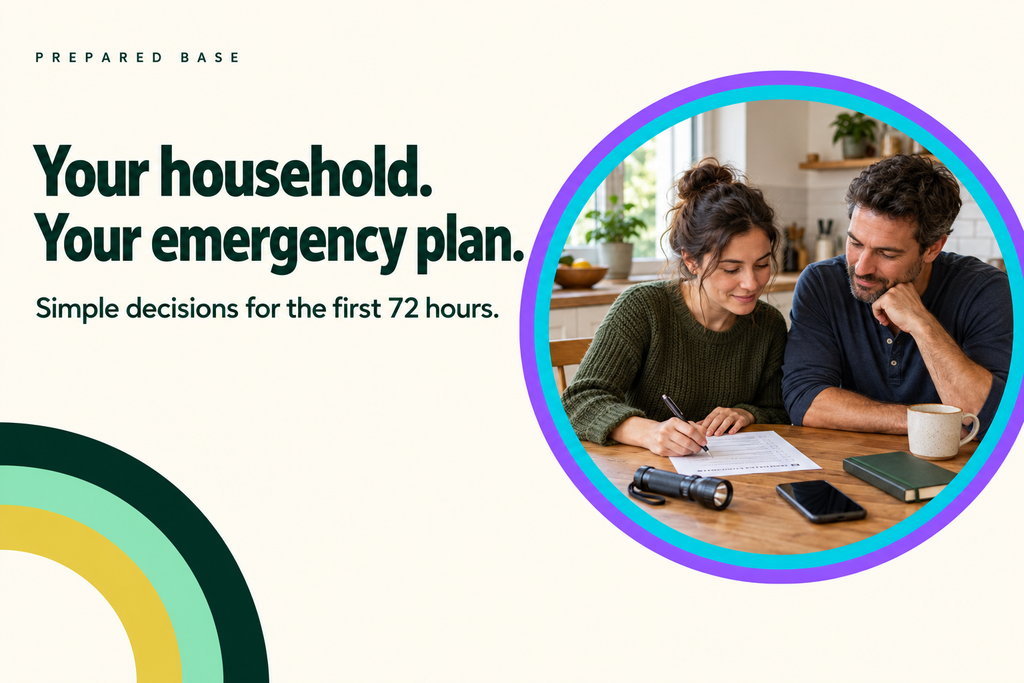
You may know where the torch is. Does everyone else?
And if the power goes out while you are away, would someone at home know who to call, where the supplies are and what to do next?
Those small details are what make an emergency plan useful. A cupboard of supplies helps, but somebody still needs to find them, use them and look after anyone who needs extra support.
Your plan can begin with a conversation and a sheet of paper. Work through what your household would need during three days of disruption, then write down the decisions you would rather make now than in the dark.
1. Start with the disruptions that could affect your home
Think about your location and daily routine. A power cut, water interruption, heating failure or severe weather could make ordinary tasks difficult. Flooding may be a particular concern where you live.
Ask a few practical questions:
- What would stop working without electricity?
- Could we eat and drink safely if the water supply stopped?
- Who would need help if the house became cold?
- What happens if we cannot get home?
- How would we leave if told to evacuate?
Some emergencies overlap. A storm might affect power, roads and phone reception at the same time. Check local risks and official advice rather than building your plan around a single scenario. UK Prepare hazard guidance
Seventy-two hours is a useful starting point for planning. It is not a promise that services will return within three days. Follow the preparedness guidance where you live and allow for your household’s circumstances.
2. Include everyone who depends on the plan
Write down who might be at home, including children, visitors and anyone you care for.
Consider mobility, hearing, sight, communication needs, medicines and equipment that needs electricity. Ask the person concerned what would help them; assumptions can leave important gaps.
If someone relies on powered medical equipment, agree an outage plan with their healthcare team and equipment provider. Record the backup arrangements and when to seek help.
Check eligibility for your energy provider’s Priority Services Register. It offers additional support for eligible customers, including people with certain health conditions or disabilities. Ofgem guidance
Include pets, too: food, water, medication, carriers or leads, and somewhere they could stay if you had to leave.
Living alone deserves its own arrangements. Choose someone who will check in, tell them how to reach you and agree what they should do if you do not respond.
3. Agree how you will stay in touch
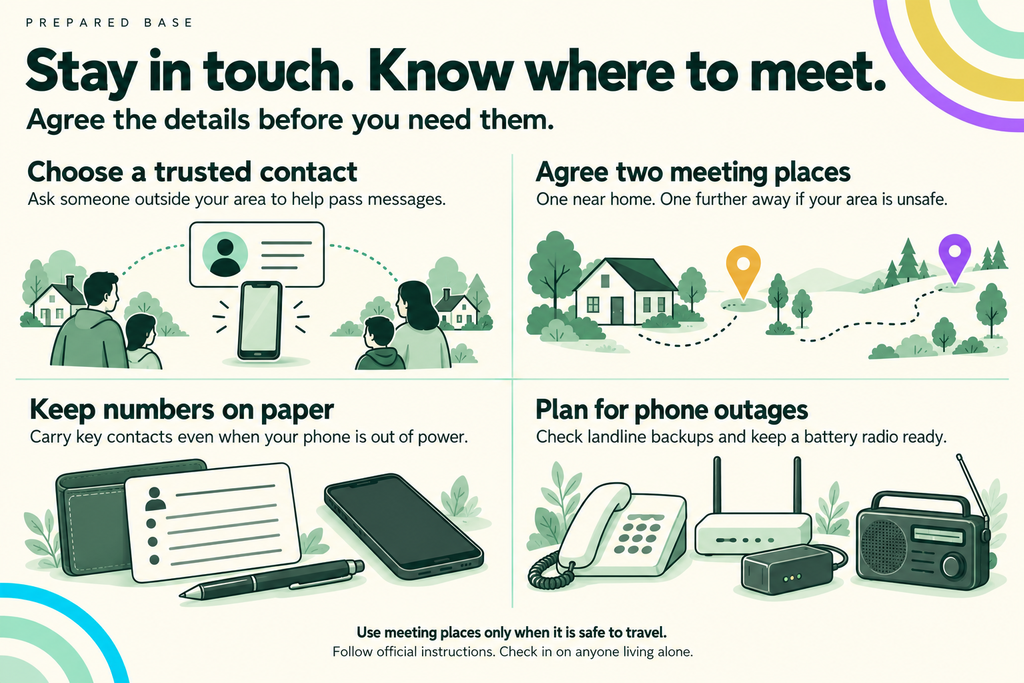
A household group chat is convenient while phones are charged and networks are working. Give yourself another way to reconnect.
Choose a trusted contact outside your immediate area who can pass messages between household members. Ask them first, and make sure everyone has their number.
Agree two meeting places:
- Near home: somewhere safe to gather after leaving the property.
- Further away: somewhere familiar to meet if the neighbourhood is inaccessible.
Write down the actual locations. “By the shops” leaves too much room for interpretation. Meeting places must remain subject to safety conditions and official instructions. The British Red Cross recommends agreeing a meeting place and an out-of-area contact before an emergency. British Red Cross planning advice
Keep contact numbers on paper as well as on phones. Include school or childcare contacts, and check their collection arrangements.
If you use a digital landline, ask how it works during a power cut. Without suitable backup power, digital landlines will stop working. Anyone who relies on a landline or a connected care alarm should discuss backup arrangements with their providers. Ofcom advice
4. Decide where reliable information will come from
Record your local council’s website, relevant emergency-service channels, utility contacts and a local radio station.
A battery-powered or wind-up radio gives you an option when broadband is unavailable. Keep the frequency with your plan so nobody has to search for it during an outage.
In the UK, Emergency Alerts can warn compatible phones about danger nearby and explain what action to take. They are based on your current location. Read the message carefully and follow its instructions. Government Emergency Alerts guidance
Before forwarding a warning, check where it came from and when it was issued. Yesterday’s information can create confusion today.
5. Match your supplies to three days of everyday needs
Check what you already have, then work through the gaps.
| Need | What to account for |
|---|---|
| Water | Everyone’s drinking needs, plus food preparation, hygiene, care needs and pets. |
| Food | Three days of suitable meals and snacks, including options that need no cooking. |
| Light and communication | Torches, suitable batteries, a charged power bank and a radio. |
| Warmth | Dry layers, blankets and a safe plan if heating fails. |
| Health and hygiene | First aid supplies, regular medicines and essential personal-care items. |
| Babies and pets | Their usual food or feeds, equipment and care supplies. |
Keep supplies somewhere accessible and make sure everyone knows the location. Build them gradually if that suits your budget. UK Prepare supplies guidance
Try the equipment. A radio nobody knows how to tune, or a torch with the wrong batteries, is a problem you can solve now.
6. Plan for staying home and leaving
During some incidents, official advice may be to stay indoors. During others, you may need to leave. Your plan should cover both.
For staying home, identify an accessible room where you can gather, find supplies and follow updates.
For leaving, agree where you could go, how you would travel and who might need assistance. Check that the destination could accommodate your household and pets.
Prepare a small grab bag with essential medicines, contact details, useful documents, a torch, charger and basic personal supplies.
A grab bag must never delay escape from a fire. Follow your home’s fire-safety arrangements; if you live in a block of flats, understand the building’s specific instructions. Do not stop to collect belongings during an immediate escape. UK Prepare fire guidance
7. Give people clear jobs
Agree who will check official updates, help children or anyone needing support, contact your chosen person and deal with pets. Add a backup for each task.
Keep jobs realistic. Children can learn where to meet and how to call for help; adults should handle utilities and other potentially hazardous tasks.
Record where the water stopcock and relevant switches are. Learn their safe use beforehand, without opening equipment or attempting repairs.
For a UK plan, include 999 or 112 for immediate danger. Record 105 for power cuts in England, Scotland and Wales, or 03457 643643 in Northern Ireland, alongside your water provider and repair contacts. UK Prepare contact guidance
8. Put the decisions on one page, then practise
Use a simple format:
| Our household plan | Details to write down |
|---|---|
| People and pets | Names and particular support needs |
| Emergency contacts | Household numbers, trusted contact and utilities |
| Meeting places | Exact nearby and alternative locations |
| Supplies | Where they are kept |
| Leaving home | Destination, transport and assistance |
| Responsibilities | Who does what, with a backup |
| Review | Date checked and outstanding tasks |
Keep a paper copy somewhere everyone can find it, with a second copy in your grab bag. Store personal information sensibly.
Then walk through a few situations. Can everyone find a torch? Can they locate the contact list? What would happen if the usual person were away?
Ready Scotland recommends involving children in household planning so they understand the arrangements and feel more secure. Ready Scotland guidance
Review the plan when contact details, health needs or living arrangements change. An occasional short check will also help keep it familiar.
Start with the contact list and meeting places. Once those are agreed, you have already given your household something valuable: a way to find help and find each other.