

First Aid Base
Organise first aid supplies, personal health information and continuity plans.
Prepared Base checklist
Your checklist
Check what you already have and choose what to work on next.
Dressings and protection0 / 8
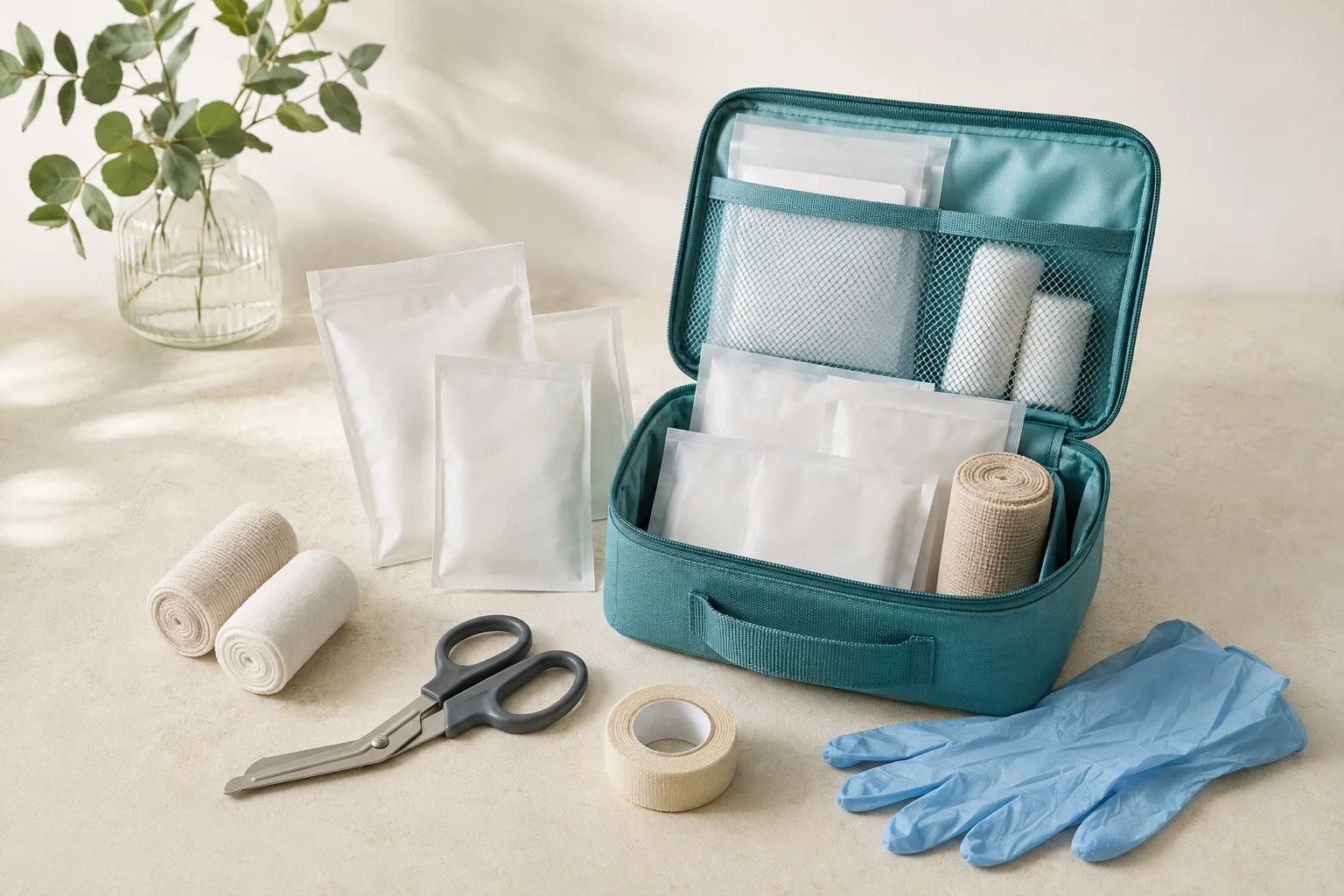
Keep a suitable household kit accessible; check contents and expiry dates.
Include assorted sizes.
Keep sealed wound dressings.
Include suitable sizes.
Useful in a general first aid kit.
Keep compatible tape for securing dressings.
Choose appropriate sizes.
Use labelled sterile products as directed.
Tools, guidance and skills0 / 5
Keep safe scissors with the kit.
Keep clean and with the kit.
Check it works and has batteries.
Keep current recognised first aid guidance.
Attend a recognised course; equipment does not replace training.
Medication planning0 / 4
Discuss continuity and an appropriate reserve with the pharmacist or prescriber; do not change doses. Only needed where relevant: prescription users.
Record current medicines, doses and allergies.
Plan for temperature-sensitive medicines with your pharmacist. Only needed where relevant: temperature-sensitive medicines.
Choose familiar medicines suitable for your household and follow labels.
Personal aids, contacts and review0 / 5
Keep usable spare glasses where possible. Only needed where relevant: glasses users.
Keep compatible batteries or charging backup. Only needed where relevant: hearing aid users.
Record conditions and emergency contacts.
Record GP, pharmacy and relevant care-team numbers.
Review expiry dates and personal needs regularly.
Keep your household plan current0 / 5
Keep it identifiable and stored according to the instructions.
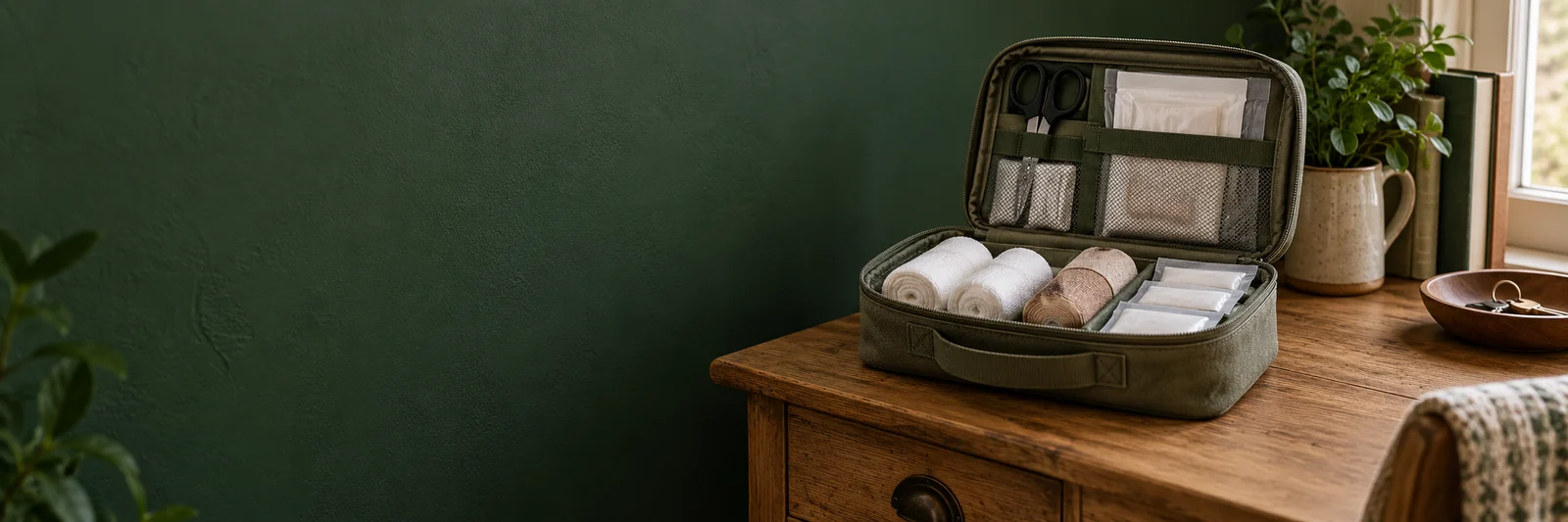
View Household First Aid KitUse the kit’s checklist to spot missing, damaged or expired supplies.
Retain the guidance supplied with your equipment.
Make sure those who may need it can find it.
Find a suitable recognised course for your household.
Enable JavaScript to save your progress on this device.